The Creation
October 19 is a date that every Russian remembers from their school days. On that day, exactly 200 years ago, the Lyceum opened - an institution from which A. Pushkin graduated, as well as a great number of statesmen and cultural figures who left a deep mark on the history of Russia. The Lyceum is not only a list of brilliant people; it is, first of all, a unique model of an educational system, the study of which is especially important for Russia today.
The decree for the creation of the Lyceum was signed by Alexander I on August 12, 1810. The decree stated: “Учреждение лицея имеет целью образование юношества, особенно предназначенного к важным частям службы государственной” (the establishment of the lyceum aims at the formation of young people, especially dedicated to occupy important posts in the Imperial service).
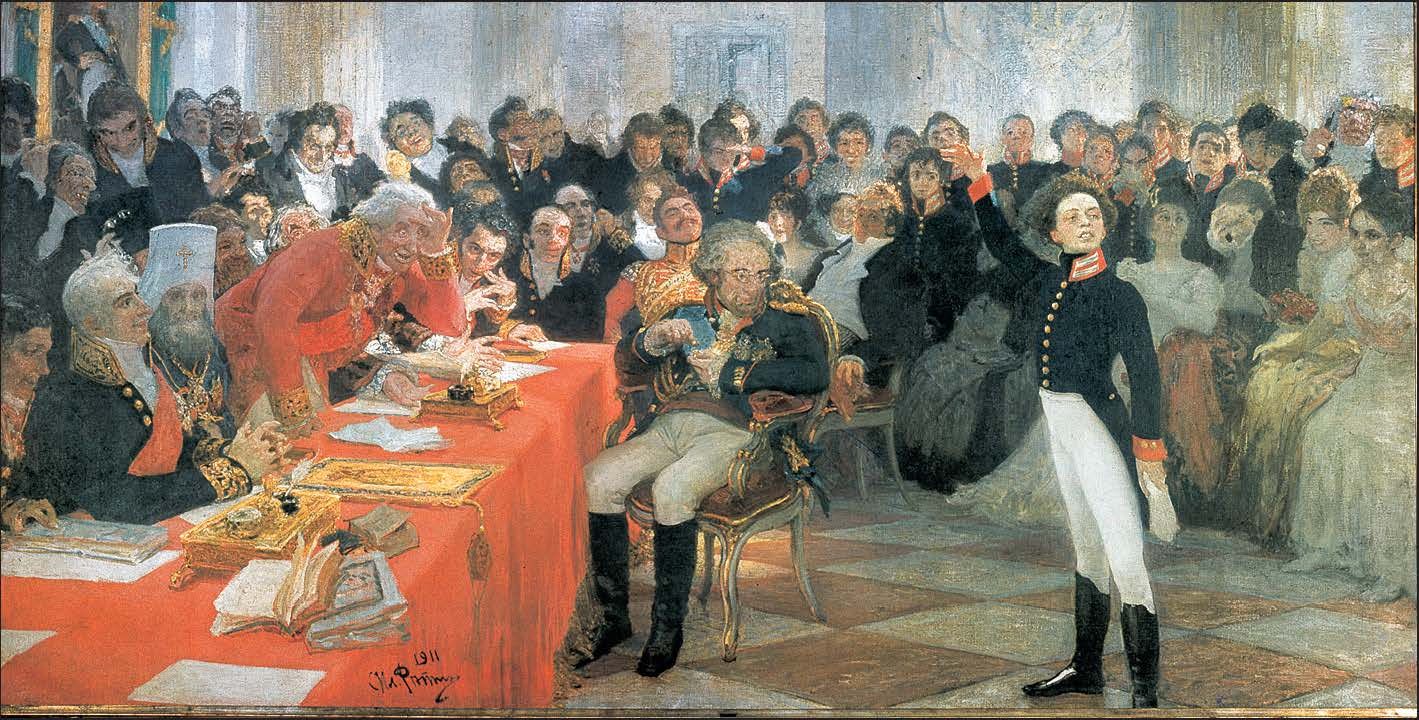
The program given to the students was similar to the one offered by the best European universities. But this was not the main thing. On the day of the official opening, the first director of the Lyceum, Alexander Petrovich Kunitsyn (1783-1840), addressed the new students and said: “Любовь к славе и отечеству должны быть вашими руководителями” (Love for glory and your country should be your leader). Later Pushkin will respond to him in one of his poems:
Куницыну дар сердца и вина:
Он создал нас, он воспитал наш пламень;
Поставлен им краеугольный камень,
Им чистая лампада зажжена.
Kunitsyn gift of heart and wine:
He created us, he raised our flame;
Providing the foundation stone,
Lighting a clean lamp.
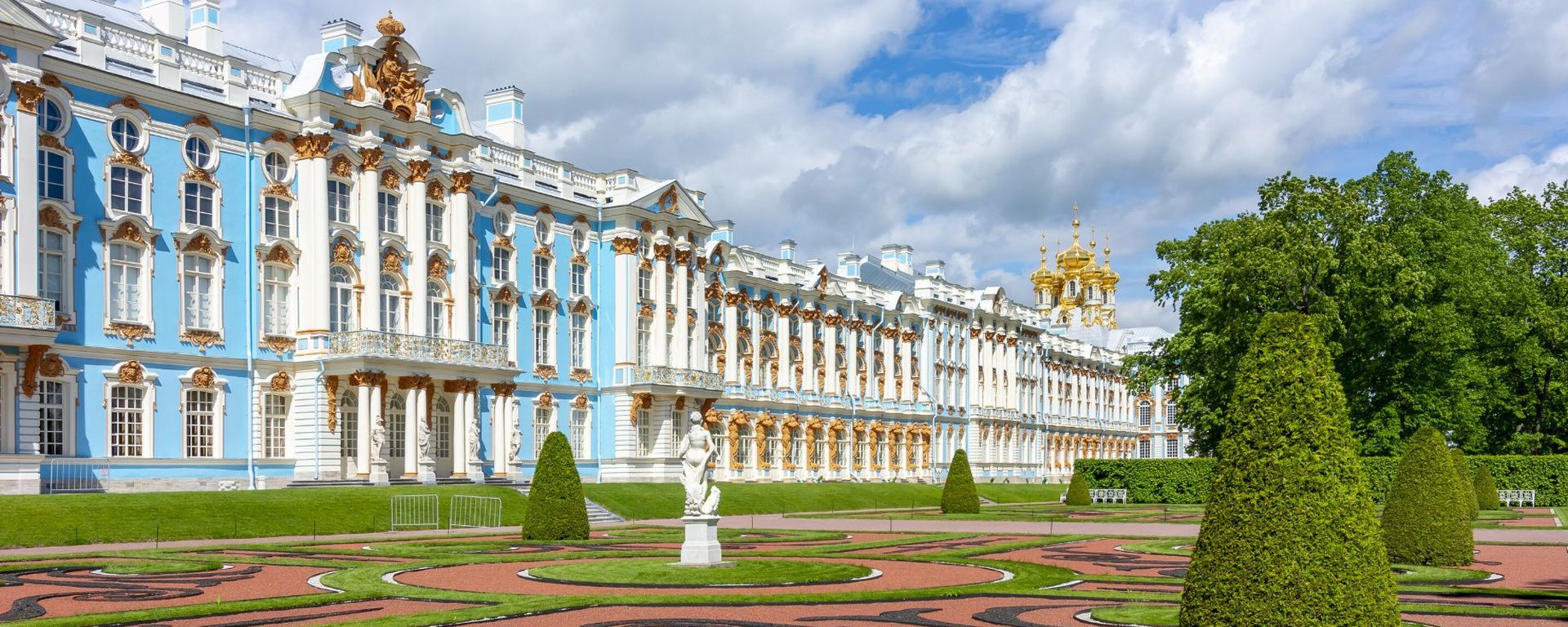
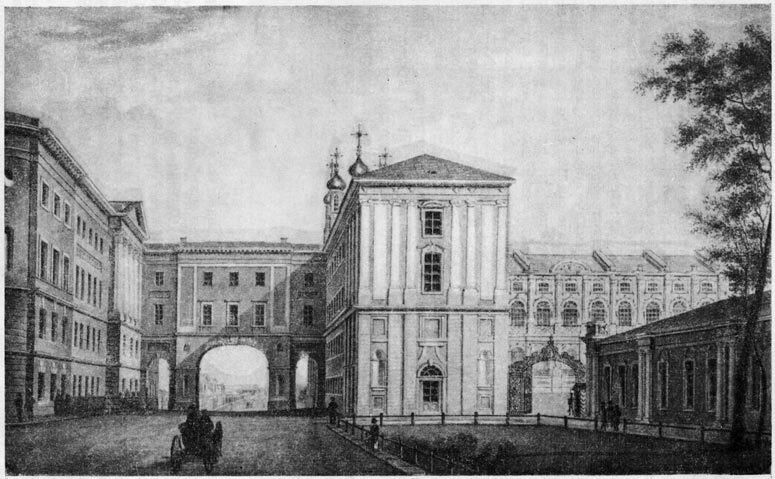
The choice of location for the Lyceum was also not accidental. The Lyceum was located in a building adjacent to the Catherine Palace. According to its creators, the proximity of the royal court was meant to help in the education of future government officials.
Daily Life at the Lyceum
Pushkin entered the Lyceum in June 1811, when he was only 12 years old. The future poet spent six years there. In the first year, 30 students were accepted into the Lyceum. According to the school’s regulations, children of the old nobility could study there from the ages of 10 to 12.
The rules of the Lyceum were very strict: students had to get up at 6 a.m. and study in class for seven hours every day. During the first three years, the students followed the program of a high school gymnasium. The next three years were devoted to the programs of three faculties: philology, moral science and politics, physics and mathematics.
The outwardly strict rules did not restrict the internal freedom of the students. According to the rules of the Lyceum, students could not be punished for a lack of success in disciplines for which they had no aptitude. It was important to display their talents.
In the preserved students' records, A. Pushkin had the lowest scores on all the natural sciences, along with the highest grades in philology and Arts. This was stated in the school charter as follow: “Основное правило доброй методы … состоит в том, чтобы не затемнять ума детей пространными изъяснениями, а возбуждать собственное его действие” (the basic rule of good practices … is not to obscure the mind of children with extensive explication, but to arouse his own freedom of action).
Regardless of the specialization at the end of their training, each student should be able to write poetry in Russian, as well as in French and German. Much attention was given to physical education. The program included gymnastics, outdoor games, dancing, riding, fencing, and swimming. No matter the weather, students of the Lyceum had to walk around the park for several hours every day to harden their bodies and develop a fearless and independent character. Graduates would remember their time at the Lyceum as the best years of their lives.
Друзья мои, прекрасен наш союз!
Он как душа неразделим и вечен –
Неколебим, свободен и беспечен
Срастался он под сенью дружных муз.
Куда бы нас ни бросила судьбина,
И счастие куда б ни повело,
Все те же мы: нам целый мир чужбина;
Отечество нам Царское Село.
(“19 октября”. А.Пушкин)
My friends, how beautiful our union is!
Eternal like the soul, it can’t be broken.
It withstands all, free, careless, and outspoken:
Our links were formed by friendship and the Muse.
Where’er we’re cast by Fate, whate’er it’s storing,
Wherever happiness might let us roam,
We’re still the same: the whole world’s strange and foreign,
And Tsarskoye Selo is our true home.
(“October 19”. A. Pushkin)
You can now read the second part of the history of Tsarskoye Selo.
Тамара Мелентьева