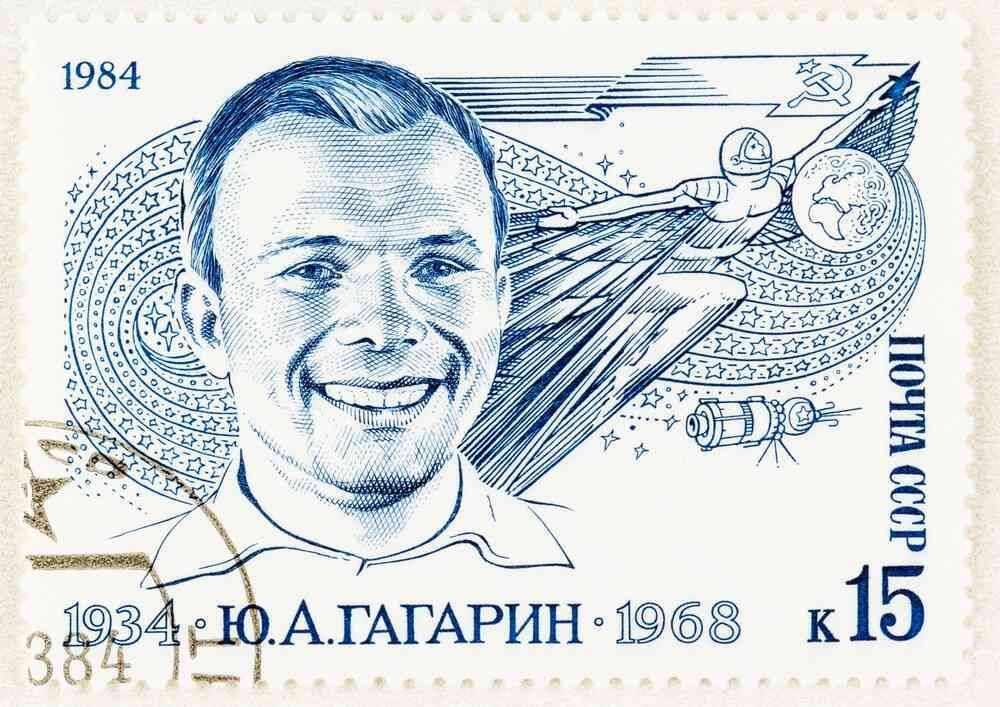
First Human to Leave the Earth Atmosphere
On April 12, 1961, Yuri Gagarin became the first human to leave Earth’s atmosphere and orbit the planet aboard his spacecraft, “Восток-1” (Vostok 1). A replica of the Vostok rocket can be found in the middle of VDNKh Park in Moscow. The 108-minute flight made him the most famous man in the world. Sixty five years later, his achievement still fascinates us - not only because he accomplished the first human spaceflight and completed a full orbit of Earth, but also because he opened the door to human access to space.
Gagarin's Early Years
Юрий Алексеевич Гагарин (9 March 1934 – 27 March 1968) was born in a small village in the Smolensk Oblast, west of Moscow. In his early years, during the war, he and his family suffered under Nazi occupation. However, this did not stop the young Gagarin from becoming interested in space and dreaming about other planets. While studying at a technical high school in Saratov, he joined an aeroclub and learned to fly. He graduated from a military flying academy in 1959.
Soviet Space Program
In 1960, Yuri Gagarin was one of twenty pilots recruited for the Советская космическая программа (Soviet space program). After further selection, Gagarin - who was not only an accomplished sportsman but intelligent and hard-working - was chosen, along with Gherman Titov, as one of the final candidates for the first spaceflight.
On April 12, 1961, Gagarin took his place aboard the rocket Vostok 1. The spacecraft was fully automated, as no one knew what effects the flight might have on the pilot. As his incredible journey began, Gagarin exclaimed, “Поехали!” (Let's go!).
Vostok 1
“Vostok 1” had two sections: one for the pilot and one for water and oxygen. Everything went well during the flight, but as the rocket re-entered Earth’s atmosphere, the two sections did not separate properly. As a result, the spacecraft began spinning out of control. Yuri Gagarin had to eject and land by parachute.
Hero for Millions of People
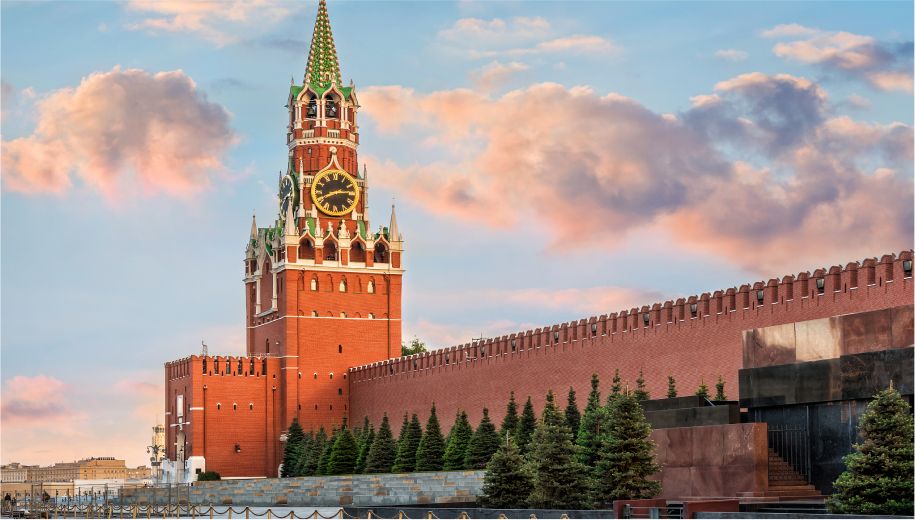
Although Soviet officials never allowed Yuri Gagarin to take part in another spaceflight for fear of losing their hero, he continued working in Star City, the cosmonaut training center. He died at the age of 34 during a training flight on March 27, 1968. His ashes were buried in the walls of the Kremlin on the Red Square. In honor of his contributions to space exploration, a crater on the Moon was named after him.
More than half a century later, Gagarin remains an inspiration to many astronauts and a hero to millions of people around the world - Russians and foreigners alike. He is one of the few heroes from the Soviet time whose popularity has remained entirely after the dissolution of the Soviet Union.