Pashkov House in Moscow: History, Legends and Bulgakov’s Mysterious Terrace
«На закате солнца высоко над городом на каменной террасе одного из самых красивых зданий Москвы находились двое: Воланд и Азазелло. Снизу их никто не мог видеть, им же город был виден почти весь».
“At sunset, high above the city, on the stone terrace of one of Moscow’s most beautiful buildings, stood two figures: Woland and Azazello. They could not be seen from below, while almost the entire city lay before them.”
— Mikhail Bulgakov, The Master and Margarita
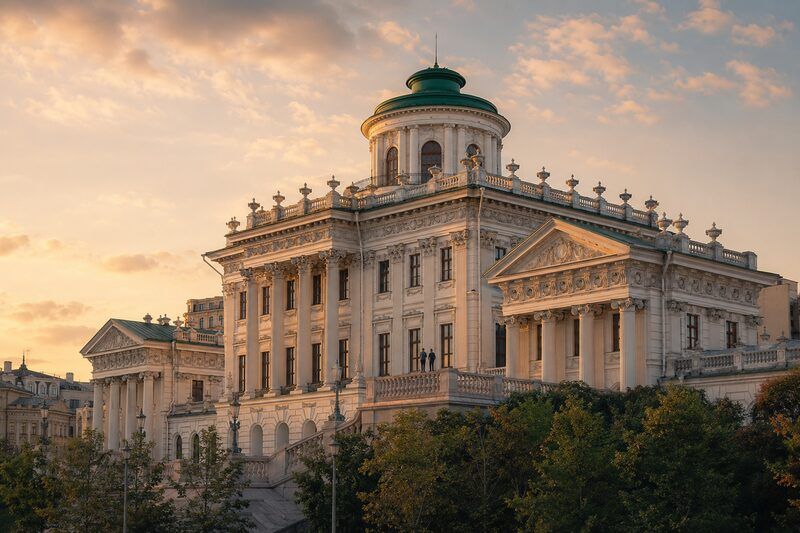
In The Master and Margarita, Mikhail Bulgakov chose the terrace of Pashkov House as the place from which Woland and Azazello take their final look at Moscow. It was a fitting choice. Standing on Vagankovsky Hill opposite the Kremlin, Pashkov House offers one of the most dramatic views in the city—and has a history mysterious enough to belong in Bulgakov’s novel.
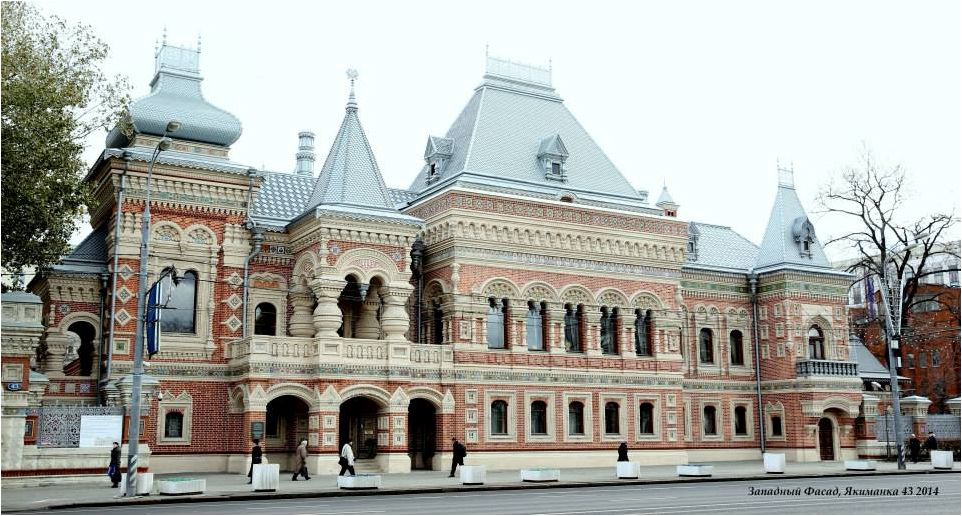
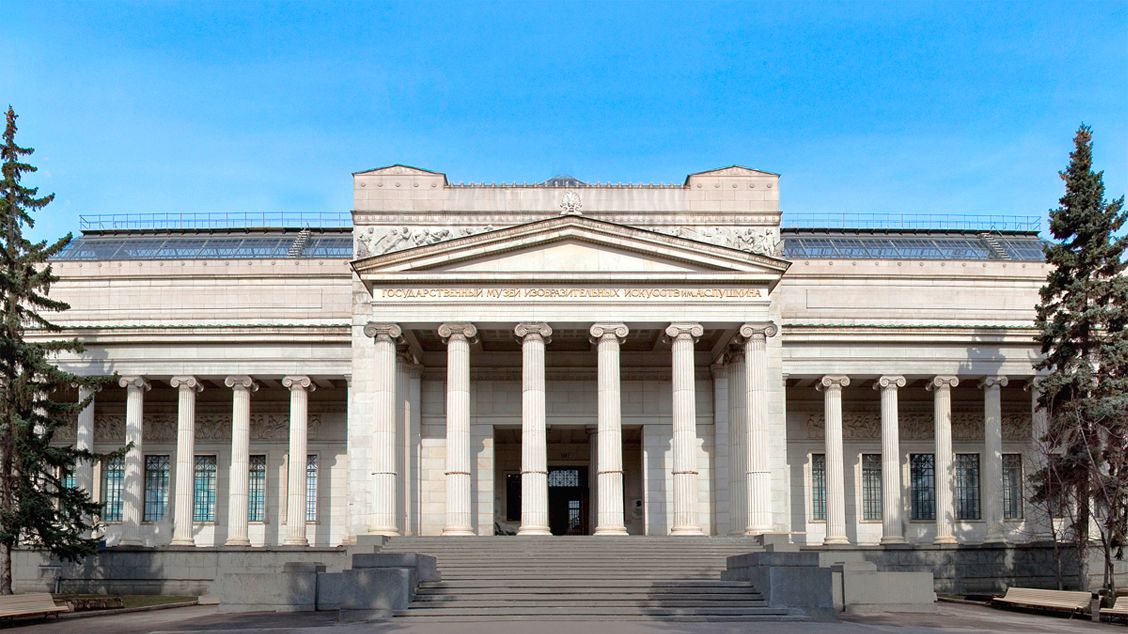
Today, this elegant white mansion is one of the most recognisable Moscow landmarks near the Kremlin and forms part of the Russian State Library. Yet behind its perfectly balanced classical façade lie stories of imperial rivalry, war, lost books, underground tunnels and even a library ghost.
Pashkov House is also a perfect illustration of the city described by generations of Russian authors: grand, contradictory and never completely knowable. You can discover more literary views of the capital in our article The Soul of Moscow.
The History of Pashkov House
Pashkov House was built between 1784 and 1786 for Pyotr Egorovich Pashkov, a retired captain-lieutenant of the Semyonovsky Life Guards Regiment. His father had served as an orderly to Peter the Great, while Pashkov himself inherited considerable wealth and became known in Moscow for his involvement in the profitable wine trade.
The design of the house is traditionally attributed to Vasily Bazhenov, one of the leading Russian architects of the eighteenth century. However, the original documents were lost, and his authorship has never been confirmed beyond doubt.
The site presented the architect with a serious challenge. Vagankovsky Hill is steep and uneven, with a narrow edge facing the Kremlin. Rather than trying to hide these difficulties, the architect used them to create one of the most impressive views in Moscow. The mansion seems to rise above the hill, while its central belvedere makes the building appear even taller.
Why Does Pashkov House “Turn Its Back” on the Kremlin?
One of the best-known legends about Pashkov House concerns the position of its main entrance.
The building’s grand façade overlooks the Kremlin, but its main entrance was placed on the other side. According to popular legend, Bazhenov deliberately “turned the house’s back” on the imperial residence as an act of revenge against Catherine the Great.
The architect had previously worked on a palace complex for the empress at Tsaritsyno. Catherine disliked the project, and much of his work was later demolished. Some Muscovites therefore interpreted the unusual position of Pashkov House as Bazhenov’s elegant architectural protest.
There is also a more practical explanation: because of the steep hill, the rear of the estate offered much easier access for carriages. As with many Moscow legends, the truth is less certain—and perhaps less entertaining—than the story.
From Private Mansion to Moscow’s First Public Museum
In 1839, the Russian government purchased Pashkov House for Moscow University. It was later used by the Institute for the Nobility and a boys’ grammar school.
A new chapter began in 1861, when the building was transferred to the Rumyantsev Museum. Opened to the public the following year, it became Moscow’s first public museum and included an extensive collection of books, manuscripts, maps, paintings and historical objects.
The history of public museums in Russia had begun much earlier with Peter the Great’s Kunstkamera in St Petersburg. Its unusual collection and its role in Russian cultural life are explored in our article The First Museums in Russia.
After the 1917 Revolution, many of the Rumyantsev Museum’s art collections were moved to other institutions. The library remained and gradually developed into what is now the Russian State Library, one of the largest libraries in the world.
Today, Pashkov House contains important collections of manuscripts, music publications and maps. Its magnificent halls can be visited on an organised tour, while registered readers of the Russian State Library may access some of its departments.
Pashkov House in The Master and Margarita
For readers of Russian literature, Pashkov House is inseparable from Mikhail Bulgakov’s The Master and Margarita.
Near the end of the novel, Woland and Azazello stand on a high stone terrace overlooking Moscow. Bulgakov does not name the building directly, but the description points unmistakably to Pashkov House.
From this terrace, the characters stand above the everyday life of the city, looking towards the Kremlin and across Moscow. The classical building becomes a border between the familiar world and the supernatural Moscow created by Bulgakov.
The city is not simply a background in the novel. Its streets, ponds, theatres and old houses participate in the story, making The Master and Margarita one of the most fascinating literary routes through Moscow.
Those who would like to experience the novel beyond the page can also see The Master and Margarita at the Gorky Moscow Art Theatre. Valery Belyakovich’s production brings together 1930s Moscow and ancient Yershalaim through expressive staging, music, light and costume. It is a particularly atmospheric continuation of a walk through Bulgakov’s Moscow—and an opportunity for learners to hear literary Russian performed on stage.
Russian writers have shaped not only the way we imagine Moscow but also the language itself. Read Russian Words Invented by Writers to discover familiar Russian words whose history began in literature.
Is Ivan the Terrible’s Lost Library Hidden Under the House?
The most fascinating Pashkov House legend lies not above Moscow but deep beneath it.
Vagankovsky Hill is sometimes named as a possible location of the legendary lost library of Ivan the Terrible. Often called the Liberia, the collection is said to have included rare Greek, Roman and Byzantine manuscripts brought to Moscow from Constantinople.
No reliable evidence has proved that the library survived—or even existed in the form described by later legends. Nevertheless, stories about underground rooms and secret passages beneath Pashkov House have fascinated historians and treasure hunters for generations.
The Ghost of the Russian State Library
Another Pashkov House legend concerns Nikolai Rubakin, a famous Russian bibliographer, writer and collector who assembled a personal library of more than 200,000 books.
Rubakin spent many years abroad, but his collection was eventually brought to Moscow and became part of the state library. According to local folklore, his spirit still walks through the library corridors.
Some members of staff say that quiet footsteps can occasionally be heard when no one is nearby. Readers searching for a particularly rare book are advised to ask Rubakin for help. The book, the story promises, may then appear in an unexpected place.
Moscow has many buildings in which documented history has gradually become inseparable from folklore. Another example can be found in Moscow Legends: The House of Beria, a story about an old mansion and the mysterious sound of a car that no one can see.
Useful Russian Words for Exploring Moscow
If you visit Pashkov House while learning Russian, these words may be useful:
дом — house
усадьба — mansion or country estate
холм — hill
библиотека — library
рукопись — manuscript
легенда — legend
тайный проход — secret passage
привидение — ghost
смотровая площадка — viewing point
Learning Russian in Moscow allows you to meet words like these outside the classroom—in streets, museums, theatres, books and conversations with local people.
Learn Russian in the Heart of Historic Moscow
Pashkov House stands only a short walk from Ruslanguage School, close to the Kremlin, the Arbat and several of Moscow’s most important cultural landmarks. This makes it easy to combine Russian language classes with discovering the city that inspired Bulgakov and many other Russian writers.
Our Russian group courses in Moscow and individual Russian lessons are available for students at different levels. You can choose an intensive programme, study around your work schedule or combine group classes with private tuition.
At Ruslanguage, learning Russian is not separated from the city around you. Moscow itself becomes part of the course: its language, literature, history and everyday life.