For many travellers, Siberia means endless forest, long winters and great distances. In the Republic of Altai, the landscape changes quickly: roads climb into mountain passes, rivers turn bright turquoise, and villages sit between forests and snow-covered peaks.
The republic lies in southern Siberia, where Russia meets Kazakhstan, Mongolia and China. Its capital, Gorno-Altaisk, is small; beyond it, the mountains take over.
For anyone learning Russian, Altai is also a useful reminder that the Russian language belongs to a country much larger and more varied than Moscow or St Petersburg. Place names, local traditions and everyday words begin to make more sense when they are connected to a landscape.
Lakes, rivers and the highest peak in Siberia
One of the best-known places in Altai is Lake Teletskoye - Телецкое озеро. Long and narrow, it lies between steep forested slopes and is sometimes called Altyn-Köl, or “Golden Lake”. Boats cross the water in summer, while walking routes lead into the surrounding mountains and taiga.
Higher in the mountains, the scenery changes again. The Karakol Lakes form a chain of seven mountain lakes, each with its own shade of water. The Shavla Lakes, beneath the North Chuya Range, are reached on foot or horseback, along trails that pass rivers, meadows and high mountain valleys.
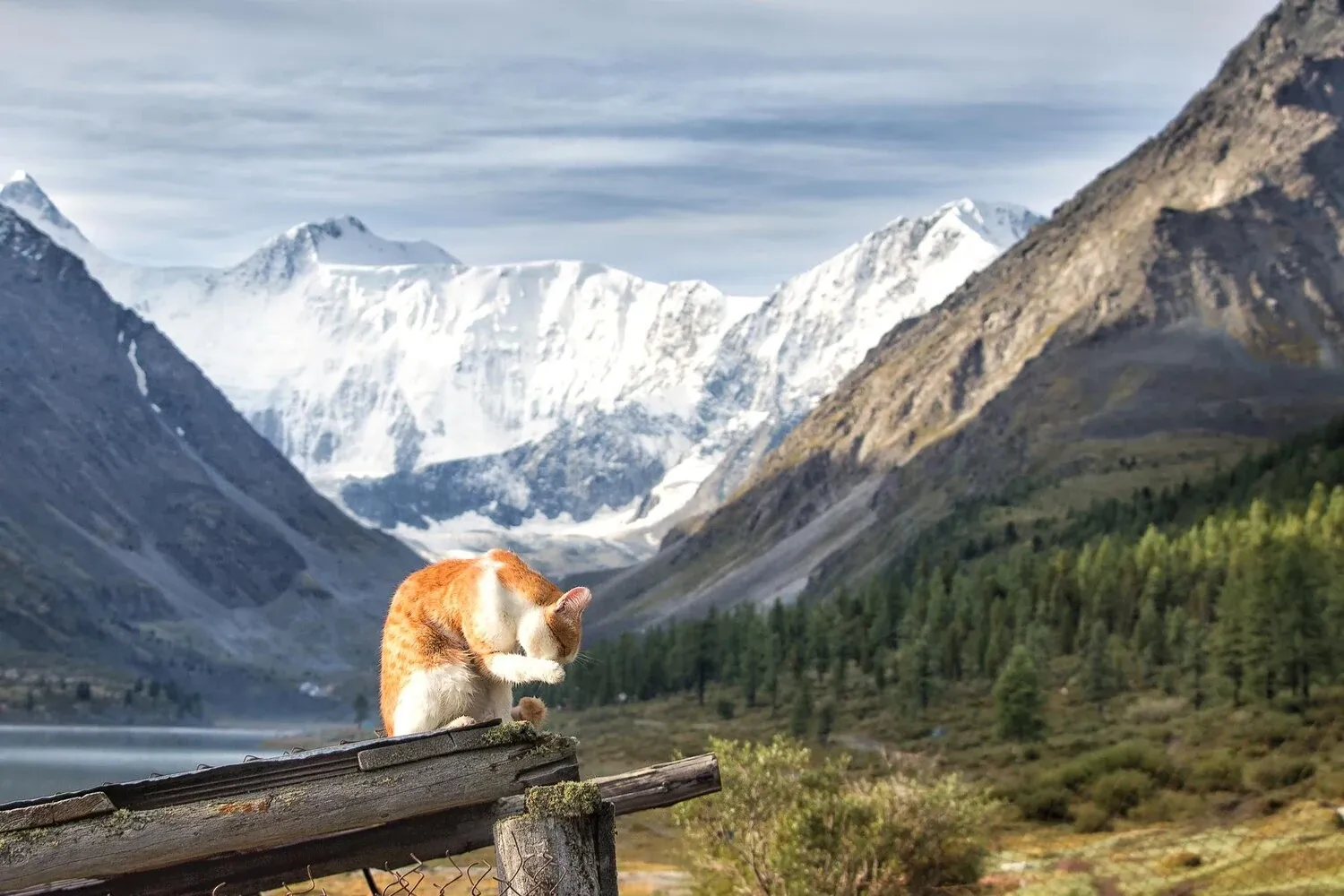
Above them all rises Mount Belukha - Белуха, 4,506 metres high. It is the highest mountain in Altai and the highest peak in Siberia, with glaciers and two white summits visible from far across the valley.
If you are beginning to learn Russian from scratch, names like Телецкое озеро or Белуха may look difficult at first. In practice, geography is often one of the easiest ways to build basic Russian: озеро means lake, гора means mountain, река means river. This kind of vocabulary appears naturally when you travel, read maps or follow stories about different parts of Russia.
Why is it called Altai?
One explanation connects the name Altai with the Mongolian word altan - “golden”.
The name suits the landscape particularly well in autumn, when the grass turns yellow and the larch forests change colour under the first snow on the mountains.
By the nineteenth century, European travellers were comparing parts of Altai with the Alps. Names such as the “Siberian Switzerland” and the “Katun Alps” began to appear in travel descriptions. The comparison is easy to understand: sharp ridges, glaciers, mountain rivers and green valleys all fit into the same view.
Altai, however, remains much less built-up. Outside the main tourist areas, roads disappear quickly and many valleys are still reached only on foot, on horseback or by off-road vehicle.
A place made for travelling slowly
There is no single way to travel through Altai. Some routes follow the Katun River, one of the great mountain rivers of the region. Others cross high passes by car or bicycle. Hikers move between mountain lakes; riders follow old paths through valleys; in winter, snow replaces the walking trails.
Lake Teletskoye offers a quieter version of the same landscape. Small boats move along the shore, stopping near waterfalls and forest paths. Elsewhere, fast rivers attract rafting groups, while the higher mountains are territory for climbers.
The variety comes naturally from the geography: lakes, steppe, taiga, glaciers and dry mountain valleys can all appear within the same region.
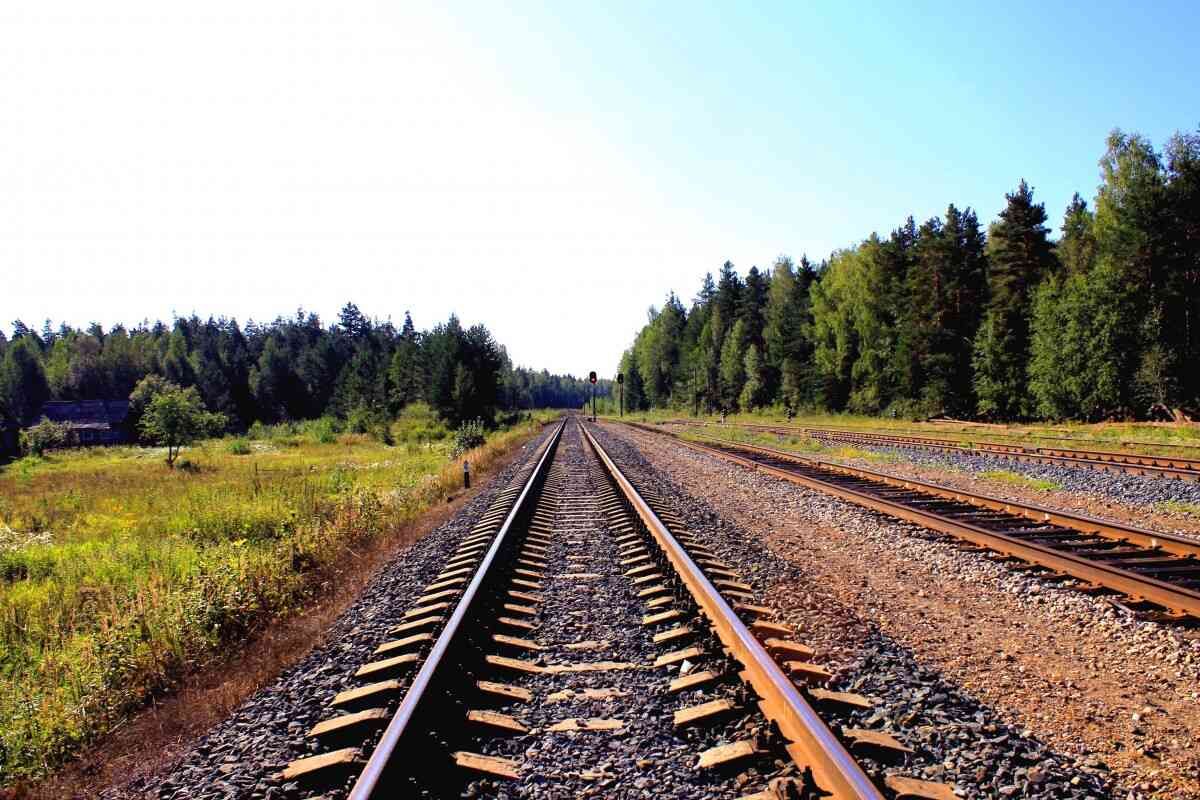
For students who learn Russian in Moscow, travel outside the capital adds another layer to the language. A Russian language course in Moscow may give you the grammar and speaking practice you need; a train station, a local market or a trip across Siberia shows where those words live. Ruslanguage offers several Russian language courses in Moscow for different schedules and levels, from intensive study to evening and weekend formats.
Under the mountains
Some of Altai’s most important places are not above ground. The region contains large cave systems, particularly in areas of limestone and karst landscape. New caves were still being explored in the twentieth century, and research continues today.
The most famous is Denisova Cave - Денисова пещера, in the valley of the Anui River. Archaeological discoveries made there changed our understanding of early human history. The cave gave its name to the Denisovans, an ancient group of humans identified through remains found at the site.
From the outside, Denisova Cave looks surprisingly modest: a wide opening in a rocky hillside above the river. Inside, layers of soil have preserved traces of human life stretching back tens of thousands of years.
For learners of Russian, Денисова пещера is also a good example of how place names become easier once you recognise the basic word inside them. Пещера means “cave”, so the name immediately tells you what kind of place it is.
Waterfalls and high valleys
Altai also hides some of its largest sights far from the main roads. On the Chulcha River is Uchar Waterfall, one of the most powerful waterfalls in the region. Water drops through a long cascade of rocks for more than 100 metres, surrounded by steep valley walls.
Reaching places like this is part of the experience. There are no wide promenades or city buses waiting nearby. Trails follow rivers, cross stones and climb through forest before the landscape finally opens. This distance has protected much of the region from heavy development.
Where cultures meet
Altai is not only a mountain landscape. For centuries, it has also been a meeting place between peoples moving across Central Asia and Siberia.
Russian Orthodox Christianity exists here alongside Buddhism and traditional Altai beliefs. In some communities, older ideas about mountains, rivers and spirits remain part of everyday culture.
Names, rituals and local stories often belong directly to the landscape. Mountains can be sacred places; certain rivers and passes carry their own traditions. Modern villages, Buddhist sites and archaeological monuments exist within the same valleys.
This cultural context matters when you learn Russian language beyond a textbook. Russian for foreigners is often taught first through everyday communication, but culture gives those words their setting. The school’s Russian language and culture blog follows the same idea, moving between language, places, traditions and modern life.
Food from the mountains
Altai honey is one of the region’s best-known products. Its taste changes depending on where the bees collect nectar: mountain meadow, forest or steppe.
Other local products include herbal teas, pine nuts and berries. Золотой корень, or “golden root”, is the Russian name for Rhodiola rosea, a plant that grows in cold mountain areas and has long been used in local herbal traditions.
These products often appear at roadside markets and in small shops along the main routes through the republic.
For someone studying Russian for beginners, a market is often more useful than a long vocabulary list: мёд is honey, орехи are nuts, ягоды are berries. Simple words become easier to remember once they are attached to something you can see, smell or taste.
Altai beyond the postcard
The most famous photographs of Altai usually show Belukha, Lake Teletskoye or the blue water of the Katun. Travelling through the region reveals smaller scenes as well: horses beside a mountain road, wooden houses beneath high ridges, jars of honey at a village market, smoke rising from a stove in the evening.
For those wondering how to learn Russian or how to speak Russian with more confidence, this is part of the answer too: language grows faster when it is connected to places, objects and real situations. A structured Russian course gives you the system; the country supplies the context.
Students who want to study Russian in Moscow can choose between intensive, evening, weekend and individual formats at Ruslanguage School. The school teaches Russian language for foreigners from beginner to advanced levels, including learners starting Russian from zero.
The road through Altai may continue towards Mongolia, disappear into a mountain valley or end beside a lake. On the map, the names remain in Russian: Катунь, Белуха, Телецкое озеро — words that are much easier to remember once there is a landscape behind them.