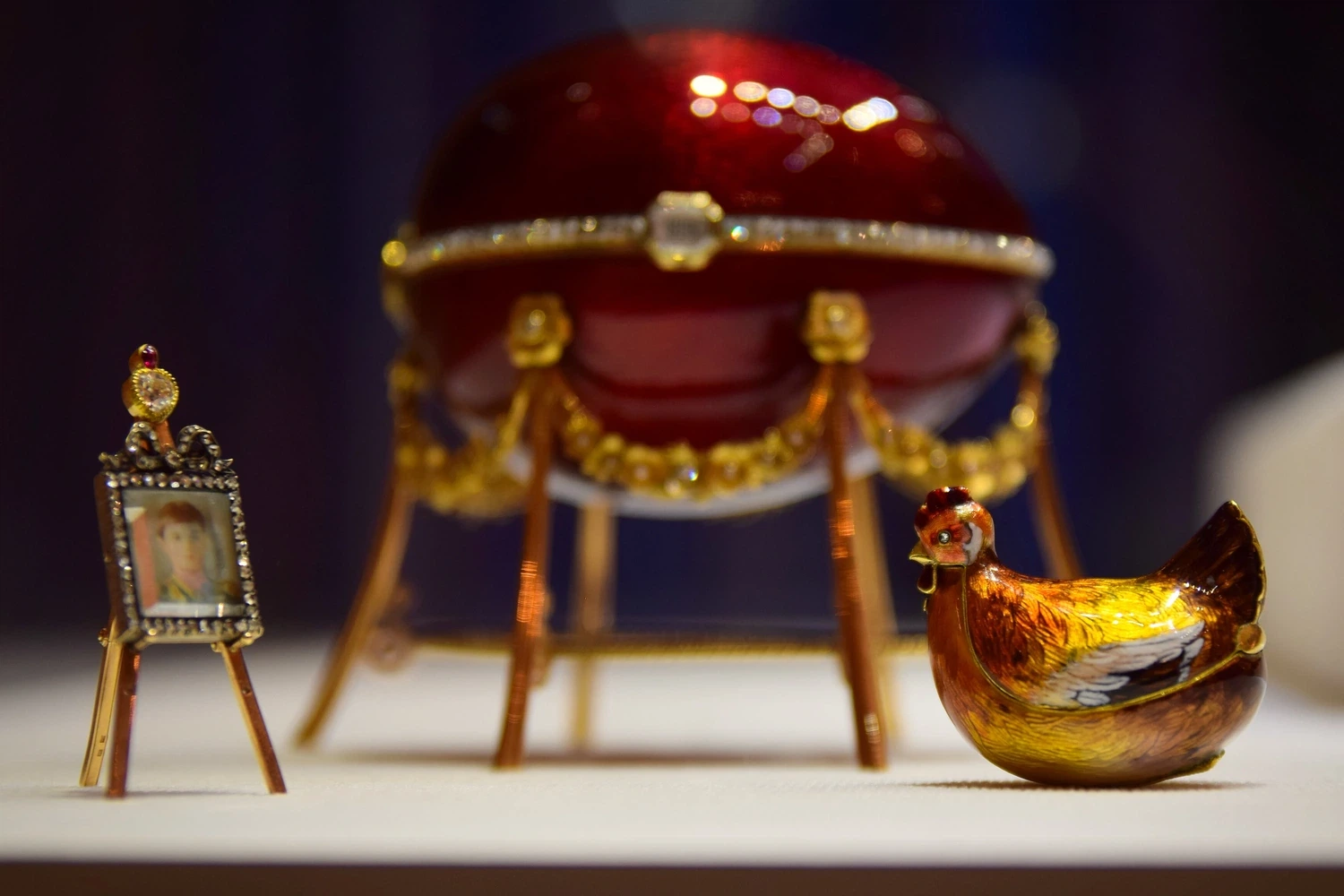
As Easter approaches, it is the perfect time to talk about the most famous Easter eggs in the world: the яйца Фаберже (Fabergé eggs). They are made of gold, enamel and precious stones, and each one hides a surprise inside.
Easter eggs in Russia
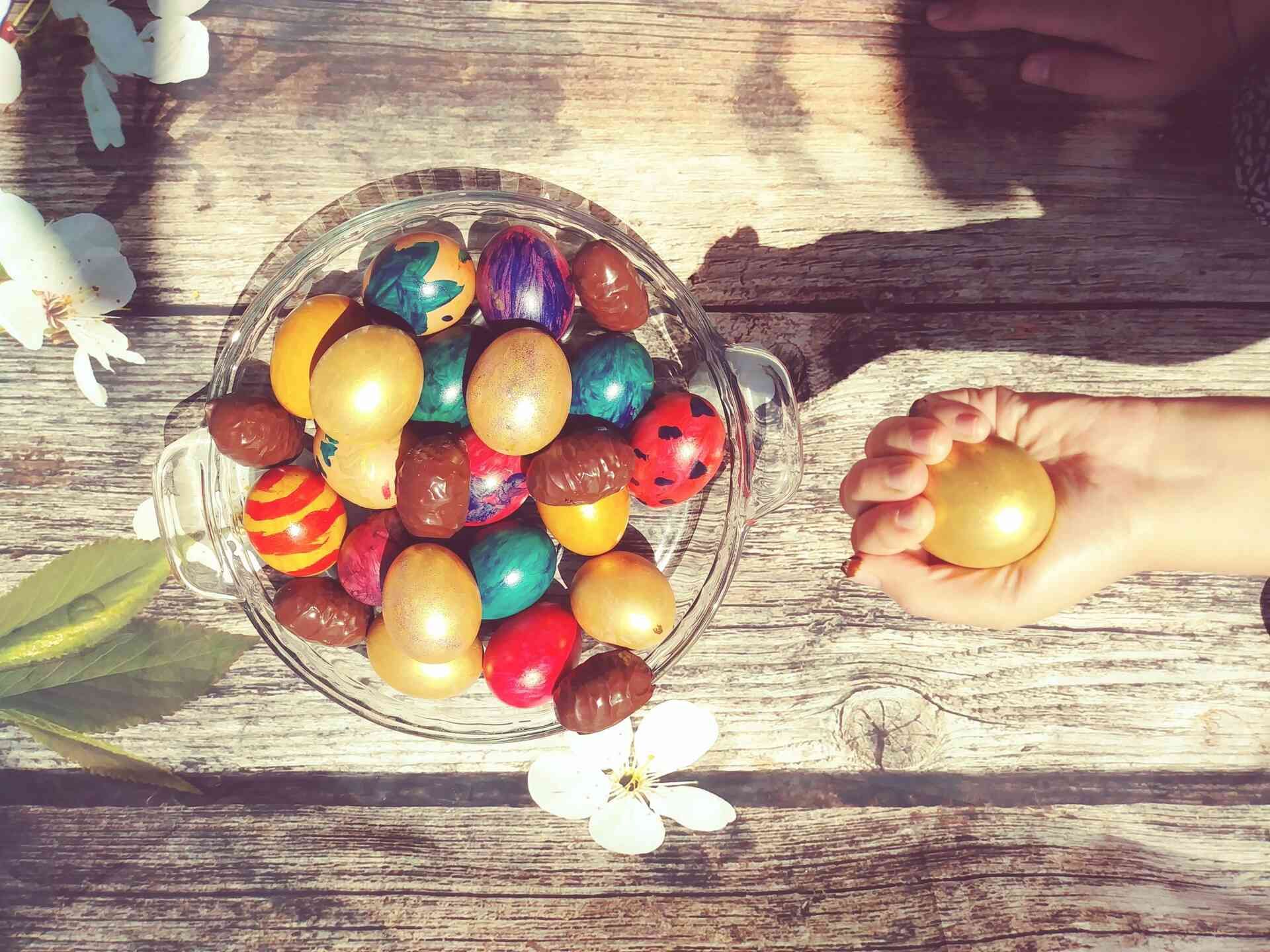
In Russia Easter is called Пасха, and giving decorated eggs has been an Easter tradition for centuries. Read more in our articles The History and Traditions of Easter in Russia and Easter Celebration with Kulich. The Fabergé eggs took this simple tradition and turned it into a work of jewellery art.
Who was Karl Fabergé?
Karl Fabergé was born on 30 May 1846 in St Petersburg. He is known all over the world for the Fabergé eggs, but his talent did not stop there: he made everything from fine jewellery to small decorative objects. Almost a hundred years after his death, he is still considered one of the greatest jewellers in history.
A family of jewellers
Karl came from a French Protestant family that left France after the Revocation of the Edict of Nantes. The family first settled in Germany, near Berlin, then in the town of Pernau (now Pärnu) in Livonia, then part of the Russian Empire, where his grandfather took Russian citizenship.
Karl’s father was a well-known jeweller in St Petersburg, and the family’s talent and reputation were known at the Russian court. After a happy childhood in the capital, Karl moved to Dresden, where he studied at the School of Arts and Crafts, while the family business stayed in the hands of a trusted manager.
In 1864 Karl set off on a Grand Tour of Europe. For about eight years he learned from respected goldsmiths in Germany, France, England and Italy. When he came back to St Petersburg, he took over the family business and, with the help of his father’s workmaster Hiskias Pendin, raised it to a new level.
The Tsar who could not tell a copy from the original
Karl’s brother Agathon, a creative and gifted designer, joined him from Berlin. In 1882, at the Pan-Russian Exhibition, they presented a copy of a gold bracelet from the Scythian treasure kept in the Hermitage, made in the 4th century BC. According to the story, the Tsar was so impressed that he said he could not tell Fabergé’s work from the original.
The first egg: «Курочка»
In 1885 Tsar Alexander III gave Fabergé the title of “Goldsmith by special appointment to the Imperial Crown”. In the same year the Tsar ordered an Easter egg as a gift for his wife, Empress Maria Feodorovna. This egg is called «Курочка» (the Hen Egg): a white enamel egg opens to show a golden yolk, and inside the yolk sits a golden hen.
The imperial family loved it so much that another egg was ordered the next year. From then on, Fabergé made an egg for the Tsar every Easter, and each one had a surprise hidden inside. Today the Hen Egg can be seen in the Fabergé Museum in St Petersburg.
Fifty imperial eggs
About fifty imperial eggs were made in total: ten for Alexander III, and the rest for his son Nicholas II. From 1895 until 1916 Nicholas II ordered two eggs every Easter, one for his mother and one for his wife, Alexandra Feodorovna. Some of the eggs have disappeared over the years, and some are kept by private owners who prefer to stay unknown.
Paris, 1900
Fabergé was a member of the jury at the 1900 World’s Fair in Paris. He showed his work hors concours, which means outside the competition, but he still received a gold medal and one of the highest French honours: he was made a Knight of the Legion of Honour.
After the Revolution
Fabergé was covered with glory and medals all over the world, but the political upheavals of the 1917 Revolution put an end to this luxury. The treasures of the house of Fabergé were scattered, mostly across the West. The American publisher Malcolm Forbes later put together the largest private collection of the eggs, and in 2004 it was bought by the Russian businessman Viktor Vekselberg and returned to Russia.
In 1917 a “Committee of Employees of the K. Fabergé Company” took over the business, and a year later the House of Fabergé was nationalised by the Bolsheviks and its stock confiscated. Karl Fabergé left St Petersburg on the last diplomatic train, lived in Germany until 1920 and then moved to Switzerland, where he died in September 1920 in Lausanne.
Easter words in Russian
Here are a few words to use at Easter: Пасха (Easter), яйцо (egg), крашеное яйцо (a painted egg) and кулич (Easter bread). The traditional Easter greeting is «Христос воскрес!» - «Воистину воскрес!» (“Christ is risen!” - “Truly He is risen!”).
Want to learn more Russian words about culture and history? Have a look at Russian language courses in Moscow, private Russian lessons online and more stories in our blog.
Photo: Raita Futo, the Kelch Hen Fabergé egg and its surprises, Wikimedia Commons, CC BY 2.0