By the late 1940s a youth subculture appeared in the Soviet Union and quickly spread through the big Soviet cities. Its members were called «стиляги» (hipsters), and their main reference was американский образ жизни (the American way of life). This story of Soviet youth culture is also a good way to learn Russian slang.
Who were the «стиляги»?
The стиляги showed нарочитая аполитичность (a deliberate indifference to politics), определённый цинизм в суждениях (a certain cynicism in their judgments) and отрицательное отношение к некоторым нормам советской морали (a negative attitude to certain norms of Soviet morality). They wore bright clothes, used their own slang and were passionate about music and dance from abroad, mostly jazz and rock-and-roll. If you like to follow how Russian youth slang changes, compare it with modern words from Russian internet slang and with the expressions in How to Say “Cool!” in Russian.
Why the subculture appeared
The subculture appeared as a kind of spontaneous protest against the way Soviet society behaved and against the uniform dress code and music. For a long time, until the mid-1960s, the Soviet press and official moral rhetoric treated стиляги as young people who chased fashion and led an immoral life. You can see what the press of that time looked like in our article What Soviet Newspapers Do You Have?.
International contacts grew a lot during and after the Second World War, and many diplomats and their families discovered other ways of life, which they associated with success and prosperity. After they came back to Russia, these families had less respect for Soviet ideology, and the young generation was the best at spreading this different way of life. They brought home from Western Europe a large amount of одежда (clothes), обувь (footwear), украшения (ornaments), fashion magazines and music. The love of foreign music later grew into Russian rock, which you can meet in the stories of Mashina Vremeni, Garik Sukachev and Pyotr Mamonov.
Some records were so hard to get that they were copied by hand on old X-ray films, which people called “music on bones” (музыка на костях).
Where the word «стиляга» comes from
The term appeared at the end of the 1940s. It is believed that the word «стиляга» came from the language of jazz musicians: the verb «стилять» (to style) was used when jazz artists played in another, borrowed style, so «стилягу дует» (the hipster blows) meant a saxophonist who plays in a borrowed style. Soon the word began to describe the musician himself.
The word first appeared in print on 10 March 1949 in the satirical magazine «Крокодил» (Crocodile, No. 7), in D. G. Belyaev’s feuilleton «Стиляга», under the heading «Типы, уходящие в прошлое» (types who are leaving the past). The author describes a young man нелепо разодетый «на иностранный манер» (ridiculously dressed up “in a foreign manner”): тщеславный (vain), невежественный (ignorant) and глуповатый (rather foolish), who is proud of his colourful clothes and his foreign dances. The other students only laugh at him and feel sorry for him.
The film «Стиляги»
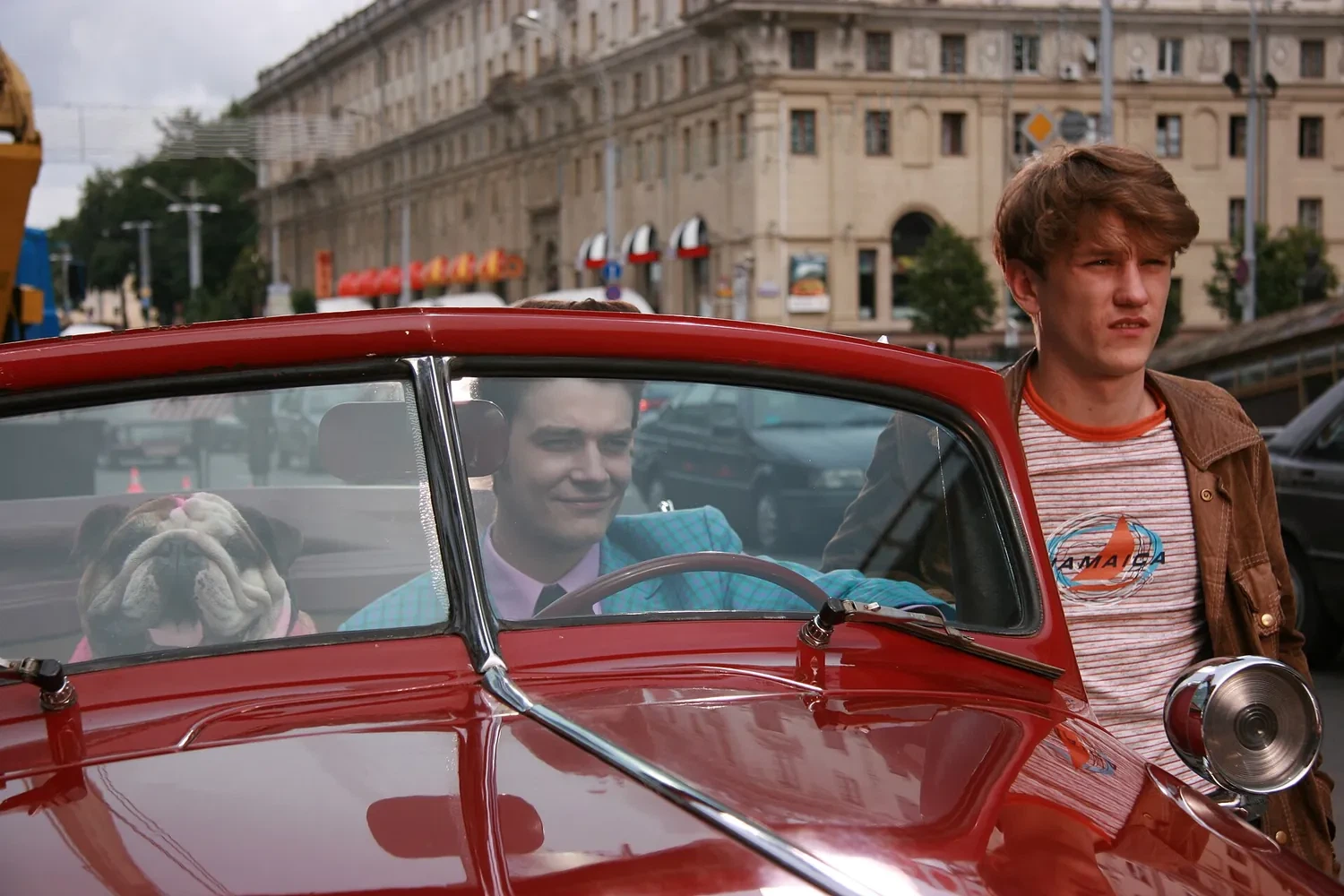
In 2008 Valery Todorovsky directed the musical film «Стиляги», which won several awards in Russia and abroad. It tells the story of Mels, a member of the Komsomol who helps to break up a hipster party. But he falls in love with one of the girls, becomes curious about their colourful dresses and their music, and decides to join their world. The film is in Russian, so it is a great way to practise listening. For more Soviet and Russian films, see The Diamond Arm and Moscow Cinema.
Russian words to remember
стиляга - hipster (plural стиляги: see our lesson on the plural of nouns); тщеславный - vain; невежественный - ignorant; одежда - clothes. To use such words in real conversations, check your level on the five levels of Russian page and join our Russian language courses in Moscow or private Russian lessons online. More stories about Soviet history and culture are in our blog.
Photo: Tatyana Pankratova, on the set of the film «Стиляги», Wikimedia Commons, CC BY-SA 3.0